How Fotona Laser Treatments Fit Into Modern Aesthetic Care
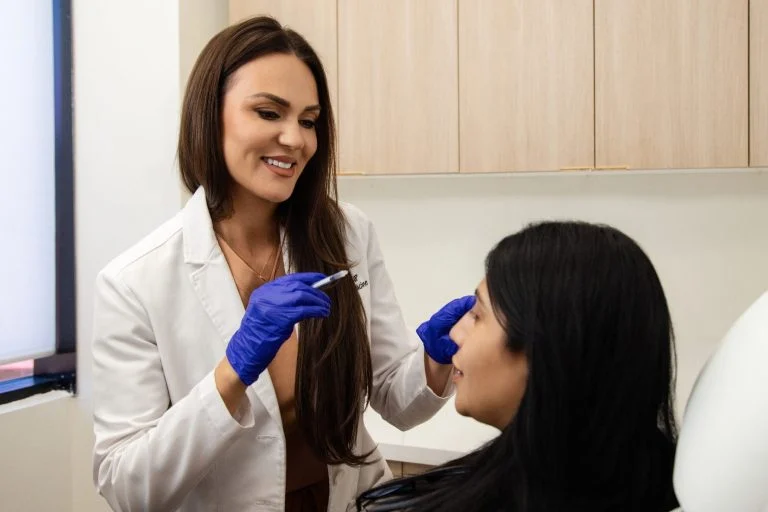
Aesthetic medicine has changed in a very practical way over the past decade. Patients still want visible improvement, but fewer are willing to accept long recovery, obvious post-treatment downtime, or results that look overdone. That shift has shaped not only which procedures clinics offer, but how experienced practitioners build treatment plans. Rather than relying on a single dramatic intervention, modern care often blends energy-based devices, injectables, topical programs, and careful timing. Within that broader framework, Fotona Laser Treatments have earned a strong place because they can address multiple concerns across different layers of tissue without forcing every patient into the same template.
That versatility matters. In a real clinic schedule, one patient may come in concerned about early lower face laxity, another about acne scarring, another about redness and textural change from years of sun exposure. Some are in their thirties and want prevention. Others are in their sixties and want meaningful improvement but do not want surgery. A platform that can be adapted to these very different goals tends to stay relevant, especially when it gives the practitioner enough control to tune depth, heat, and treatment intensity with some precision.
Fotona systems are part of that conversation because they are built around well-established laser wavelengths that can be used in different modes for resurfacing, collagen stimulation, vascular work, pigment-related concerns, and tissue tightening. The value is not that one machine does everything perfectly. No device does. The value is that it can play several roles in a thoughtful treatment plan, and in experienced hands, it often bridges the gap between low-intensity maintenance treatments and more aggressive resurfacing.
Why these treatments attract both patients and practitioners
The appeal of laser medicine is often reduced to a simple promise of better skin, but that misses the real reason clinicians continue to invest in it. Good laser work is about controlled injury and controlled healing. If the energy is delivered with the right settings, in the right tissue, for the right indication, the skin can remodel in a way that creams and facials cannot reproduce. Texture can become smoother. Certain scars can soften. Fine lines can look less etched. Laxity can improve to a degree that feels natural, especially when patients are treated before tissue descent becomes advanced.
Fotona Laser Treatments are often discussed in this context because they support both ablative and non-ablative approaches, depending on the system and handpiece in use. That range is clinically useful. Not every person can take a week off for visible peeling. Not every concern requires an aggressive resurfacing session. Sometimes the right answer is gradual collagen stimulation delivered over a series of visits. Sometimes the right answer is a more assertive treatment aimed at scar edges, deeper wrinkles, or photodamage that has accumulated over years.
Patients also appreciate treatments that can be layered over time rather than framed as all or nothing decisions. Someone who starts with mild tightening or texture refinement may later choose targeted resurfacing. Someone managing acne scars may rotate between laser sessions, subcision, medical-grade skin care, and sun protection. Modern aesthetic care works best when it leaves room for that progression.
What Fotona actually brings to the treatment room
When professionals talk about laser platforms, they are usually thinking less about brand identity and more about wavelength behavior, pulse characteristics, and tissue response. Fotona is known for systems that commonly use Er:YAG and Nd:YAG wavelengths, each serving different purposes.
Er:YAG is valued for its precise interaction with water in the skin, which makes it useful for resurfacing. That can mean anything from very light polishing to more substantial ablation, depending on the settings. In practical terms, this is where improvements in texture, superficial lines, enlarged pores, and certain scars often come into play. Because it can remove tissue with relatively controlled thermal spread, it gives practitioners a useful balance between precision and effect.
Nd:YAG penetrates differently and is often used for deeper heating, vascular indications, and tightening-oriented protocols. In aesthetic practice, that opens the door to non-ablative rejuvenation, support for collagen remodeling, and treatment designs that target deeper structures without breaking the skin surface in the same way ablative resurfacing does.
That combination is a large part of why Fotona Laser Treatments fit into contemporary care models. A clinician can work on the surface, under the surface, or across multiple levels in a planned sequence. This is especially valuable in patients whose concerns are layered. A person rarely presents with only one issue. Texture, laxity, redness, volume loss, and pigmentation often overlap. The more flexible the toolset, the easier it becomes to prioritize and stage treatment responsibly.
The move away from one-size-fits-all rejuvenation
There was a period in aesthetics when treatments were often marketed as universal solutions. Experienced clinicians know that approach rarely holds up in practice. The patient with rosacea-prone, reactive skin should not be treated exactly like the patient with thick, sun-damaged skin and acne scarring. The patient with significant melasma risk requires a different threshold for thermal intervention than the patient with minimal pigment reactivity. Even two patients of similar age may need entirely different plans because facial structure, skin thickness, lifestyle, and healing capacity vary so much.
This is where laser platforms that allow nuanced adjustment become useful, but they still depend on judgment. Fotona Laser Treatments are not valuable because they erase the need for expertise. They are valuable because they reward expertise. The same system can produce excellent outcomes or disappointing ones depending on assessment, settings, sequencing, and aftercare.
Consider a patient in her early forties with mild crepiness around the eyes, early jawline softening, and uneven texture https://maps.app.goo.gl/qXD4j3287tCBo42W7 from years of intermittent sun exposure. She may not need a fully ablative treatment. A staged approach focused first on tightening and collagen stimulation, followed later by lighter resurfacing, may give her a fresher result with less disruption to work and family life. On the other hand, a patient with established perioral lines from long-term smoking history and chronic photodamage may benefit more from a stronger resurfacing plan, assuming skin type, medical history, and downtime tolerance make that reasonable.
Those distinctions are the essence of modern aesthetic care. The best treatment is not the most powerful one. It is the one that matches the clinical problem and the person carrying it.
Where these treatments are commonly used
The face gets most of the attention, but it is not the only area that shows aging. Neck skin thins, the lower eyelid area can develop textural change, and the perioral region often reveals fine lines before patients notice broader facial aging. Hands and décolletage also show cumulative sun exposure. In a well-run practice, treatment planning often extends beyond the central face because partial rejuvenation can make untreated areas look more conspicuous.
Fotona Laser Treatments are frequently used for concerns such as skin texture irregularity, superficial wrinkles, acne scars, enlarged pores, certain vascular issues, and mild to moderate laxity. Depending on the protocol, they may also be used in areas where a gradual tightening effect is preferred over volumization. That is an important distinction. Fillers add support and contour. Energy-based treatments encourage tissue remodeling. They can complement each other, but they are not substitutes in every case.
There is also a practical benefit to treating earlier rather than later. A patient with mild laxity and early textural change often responds more predictably than someone seeking a non-surgical answer to advanced tissue descent. This does not mean older patients are poor candidates. Many do well. It means that expectations need to be aligned with biology. Lasers can improve skin quality and stimulate tightening, but they do not replicate the lifting power of surgery when excess skin and deep structural sagging become pronounced.
The importance of patient selection
Good outcomes start before the device is turned on. Skin type, pigment tendency, medication history, previous procedures, active acne, herpes simplex history, isotretinoin timing, scar tendency, autoimmune factors, and recent sun exposure all matter. So does temperament. Some people are excellent candidates biologically, yet poor candidates behaviorally because they will not avoid sun, follow wound care, or tolerate the normal healing process without panic.
In everyday practice, one of the most common problems is not a bad device. It is a mismatch between patient expectations and what the treatment can realistically deliver. If someone expects a single laser session to erase deep acne scars that formed over fifteen years, disappointment is almost guaranteed. If someone expects mild non-ablative tightening to create a surgical jawline, the technology is being asked to do a job it was never designed to do.
The stronger consultations are the honest ones. An experienced practitioner will usually explain where Fotona Laser Treatments can make a real difference, where they may only create modest change, and where another modality would be smarter. That can include surgery, radiofrequency microneedling, vascular lasers, pigment-focused devices, filler, neuromodulators, or simply a disciplined skin care plan and time.
Combining lasers with the rest of aesthetic medicine
Very few sophisticated treatment plans rely on one tool alone. Skin aging is not a single-process problem. Volume loss, bone remodeling, collagen decline, muscle movement, pigmentation, and vascular change all contribute. A laser can improve some of those pieces, but not all.
That is why combination care has become standard in strong practices. A patient with sun damage and etched lines may benefit from resurfacing, but if dynamic muscle movement keeps folding the skin in the same place, a small amount of neuromodulator may help preserve the result. A patient with better skin quality after laser treatment may still need filler in the midface if volume loss remains the dominant issue. Someone with acne scars may do better when laser sessions are paired with scar-specific interventions such as subcision or targeted chemical reconstruction, depending on scar type.
Timing matters as much as modality choice. In some cases, it makes sense to improve the skin canvas first, then address volume or movement. In other cases, restoring structural support first can change how much skin treatment is actually needed. Clinics that produce the most natural-looking results tend to think in sequences rather than isolated procedures.
A simple framework often helps patients understand this:
| Concern | What laser can help with | What may still need another approach | |---|---|---| | Fine lines and texture | Resurfacing, collagen stimulation | Dynamic wrinkles may also need neuromodulator | | Mild laxity | Tightening-oriented protocols | Significant sagging may still point toward surgery | | Acne scarring | Surface smoothing and remodeling | Tethered scars may require subcision or other scar treatments | | Uneven tone from sun damage | Skin renewal and selected pigment improvement | Stubborn pigment may need targeted pigment management | | Overall dullness | Improved skin quality and reflectivity | Daily skin care and sun protection remain essential |
That table is less glamorous than marketing language, but it reflects the reality of aesthetic care. The best result is often cumulative and layered.
Downtime, discomfort, and the reality patients should expect
One reason laser treatments remain popular is that they can be tailored across a spectrum of intensity. Still, there is no such thing as meaningful tissue change without some trade-off. If a treatment is stronger, results may be more obvious, but downtime generally increases. If downtime is minimal, improvement may be steadier and more gradual.
With Fotona Laser Treatments, the aftereffects depend heavily on the protocol. A lighter non-ablative session may leave transient redness and warmth, sometimes described as a lingering flushed look for a day or two. More intensive resurfacing can lead to swelling, redness, bronzing, peeling, and a recovery window that meaningfully affects social plans. The patient who says, “I can do anything as long as no one notices,” may not be a good candidate for an ablative Friday treatment before a Monday board meeting.
Discomfort varies as well. Topical numbing is often enough for lighter protocols. More robust resurfacing may require stronger comfort measures depending on the area treated and the treatment depth. What matters most is preparing the patient accurately. People tolerate discomfort and downtime far better when the experience matches what they were told.
There is also the issue of redness persistence. Some patients bounce back quickly. Others, especially after more assertive resurfacing, may remain pink for longer than expected. That does not automatically signal a complication, but it should be discussed before treatment rather than after.
Safety depends on skill more than marketing
Laser devices are often presented as if their safety profile is embedded in the machine itself. That is only partly true. Safety comes from appropriate patient selection, settings, technique, and aftercare. A good platform widens options. It does not eliminate risk.
Pigment changes remain one of the biggest concerns, especially in patients with darker skin tones or a history of post-inflammatory hyperpigmentation. That does not mean they cannot be treated. It means the strategy has to be more careful. Sometimes pretreatment skin conditioning, conservative settings, test spots, or even choosing a different modality is the wiser call.
Infection risk, delayed healing, acne flares, herpes reactivation, and scarring are all part of the real consent conversation, even if these complications are not common in experienced hands. The modern patient is well served by a practitioner who speaks plainly about these possibilities rather than hiding behind broad reassurance.
The strongest laser clinics usually have meticulous protocols around sun avoidance, antiviral prophylaxis when indicated, bland skin care during healing, and structured follow-up. They also know when not to treat. That restraint is part of clinical competence. Turning away a patient because the timing is wrong, the tan is fresh, the expectation is unrealistic, or the skin is too inflamed is often the mark of a serious practitioner.
Why results often look better at three months than at three days
A frequent source of confusion in aesthetic care is the timeline of improvement. Many patients naturally focus on immediate post-treatment changes, but with collagen remodeling treatments, the visible story unfolds over weeks and months. Swelling can temporarily create a “better” look early on, then fade. True structural improvement tends to reveal itself later as tissue repairs and reorganizes.
This delayed payoff suits modern care quite well. It allows patients to refresh the skin without necessarily announcing that they had something done. The changes can appear as healthier skin quality, better light reflection, softer textural irregularity, and firmer contours rather than a single dramatic shift.
That said, maintenance should be discussed honestly. Laser-induced improvement is real, but aging does not pause. Sun exposure continues. Collagen continues to decline with age. Movement patterns do not disappear. Some patients benefit from annual or periodic maintenance, while others prefer larger interventions spaced farther apart. The right cadence depends on age, baseline skin condition, goals, and budget.
The financial conversation patients actually need
Aesthetic treatments are often marketed with price tags detached from outcome logic. That can make patients compare options in a way that is not useful. A lower-cost treatment repeated many times may ultimately cost more than a stronger treatment done less often. On the other hand, paying for an aggressive procedure when the indication is mild may be wasteful and unnecessarily disruptive.
The more honest financial discussion looks at value rather than single-session price. How many sessions are likely? What is the expected degree of improvement? What maintenance will probably be needed? Is the treatment targeting the main complaint, or a secondary issue? These questions matter because patients usually judge value by visible change and longevity, not by the invoice alone.
Clinics that handle this well tend to underpromise. They explain that a course of treatment may be more effective than one session, that combination care may outperform repeated single-modality treatment, and that home care can extend results in a meaningful way. None of that is as flashy as a before-and-after reel, but it leads to better satisfaction.
Where Fotona fits best in the larger picture
There is a reason lasers remain central in thoughtful aesthetic practice. They improve skin in a way that is difficult to fake. Good light reflection, smoother texture, and tighter tissue can make every other treatment look better because the underlying canvas improves. Fotona Laser Treatments fit into this picture not as miracle tools, but as adaptable instruments that can address several common concerns across a wide range of patients.
Their strongest role is often in patients who want measurable skin improvement with a treatment plan that can be customized to tolerance, lifestyle, and anatomy. They are also valuable for clinicians who prefer to build treatment strategically, moving between superficial renewal and deeper remodeling as needed. That flexibility mirrors the direction aesthetic medicine has taken more broadly. Patients want options. Practitioners need nuance. Results need to look natural in motion and in daylight.
The clinics that use these treatments best usually share a few habits:
- They diagnose the main problem before recommending the device.
- They match treatment intensity to downtime tolerance and skin biology.
- They combine lasers with other modalities only when there is a clear reason.
- They prepare patients carefully for healing, maintenance, and realistic outcomes.
- They treat restraint as part of good medicine, not a lost sales opportunity.
That is ultimately where Fotona belongs in modern aesthetic care. Not at the center of every plan, and not on the sidelines either. It sits in the middle of a mature, individualized approach, one where technology serves judgment, and where the best result is skin that simply looks healthier, stronger, and more like itself on a very good day.
OMNIA Wellness Center
Address: 16430 Ventura Blvd Ste 207, Encino, CA 91436
Phone number: +18183868511
FAQ About Fotona Laser Treatments
What is a Fotona laser good for?
A Fotona Laser system is a versatile, dual-wavelength medical laser used primarily for non-surgical skin tightening, anti-aging rejuvenation, and dermatological treatments.
How much does the Fotona laser cost?
The cost of a Fotona laser depends heavily on whether you are looking to purchase a laser machine for a medical practice or are a patient seeking a laser treatment at a medspa.
Is a Fotona laser worth it?
A Fotona laser treatment is generally worth it if you want non-surgical skin tightening, improved texture, and collagen stimulation with very little downtime.